Brick domes, hot mineral water and a scrub that leaves you gasping — Abanotubani's sulphur baths are Tbilisi's oldest ritual, and one any visitor can walk into today.
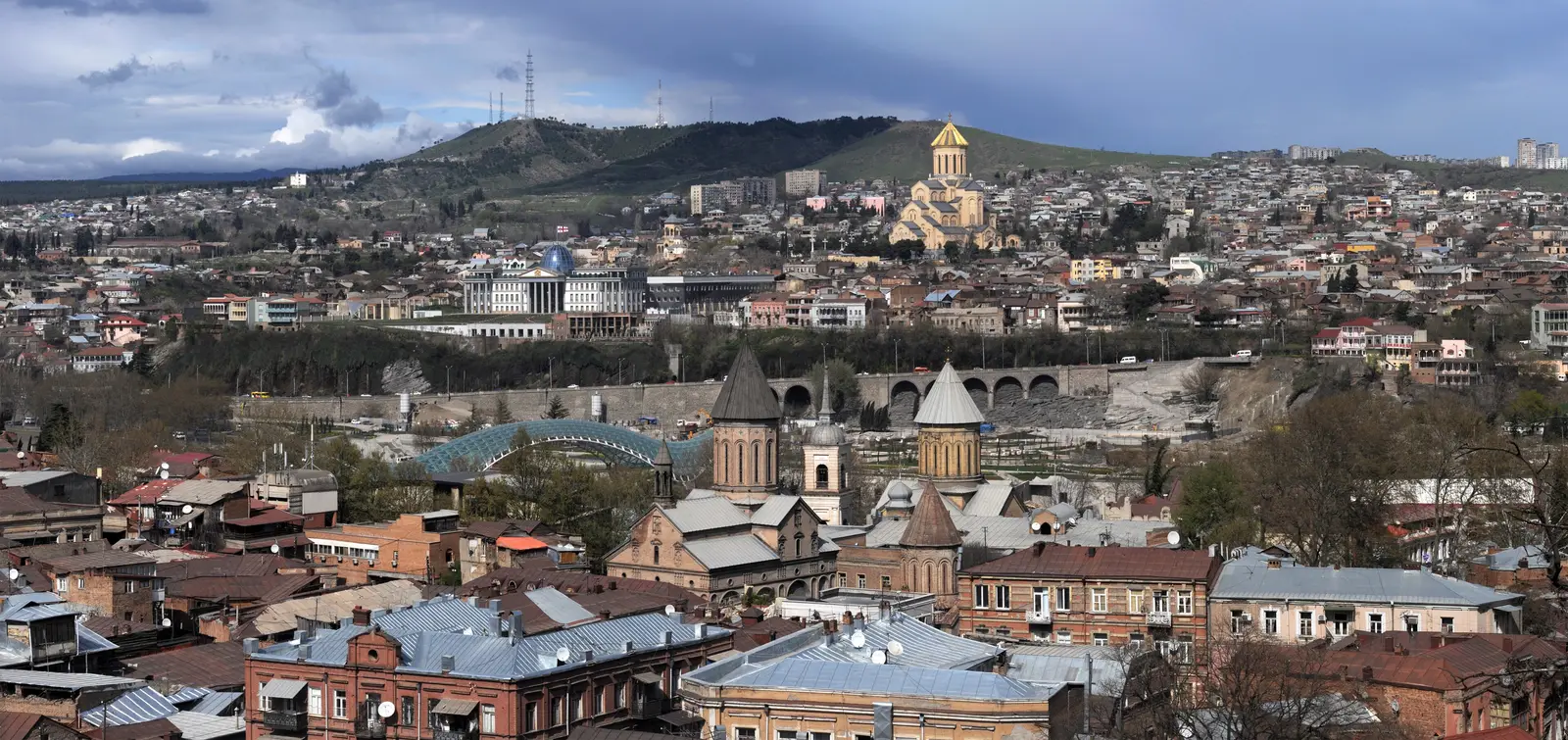
Tbilisi owes its name to a smell it never quite shakes off. "Tbili" means warm in old Georgian, and the word points straight down, to the hot sulphur springs that still bubble beneath the Old Town. Legend says King Vakhtang Gorgasali stumbled on them in the 5th century when his falcon, chasing a wounded pheasant, fell into a scalding pool and came out cooked. Impressed, the king is said to have founded his new capital on the spot. It's a good story, and like most good stories in Tbilisi, it's inseparable from the place itself: the domed rooftops of Abanotubani, huddled at the foot of Narikala fortress, mark exactly where the springs surface.
A neighbourhood built on steam
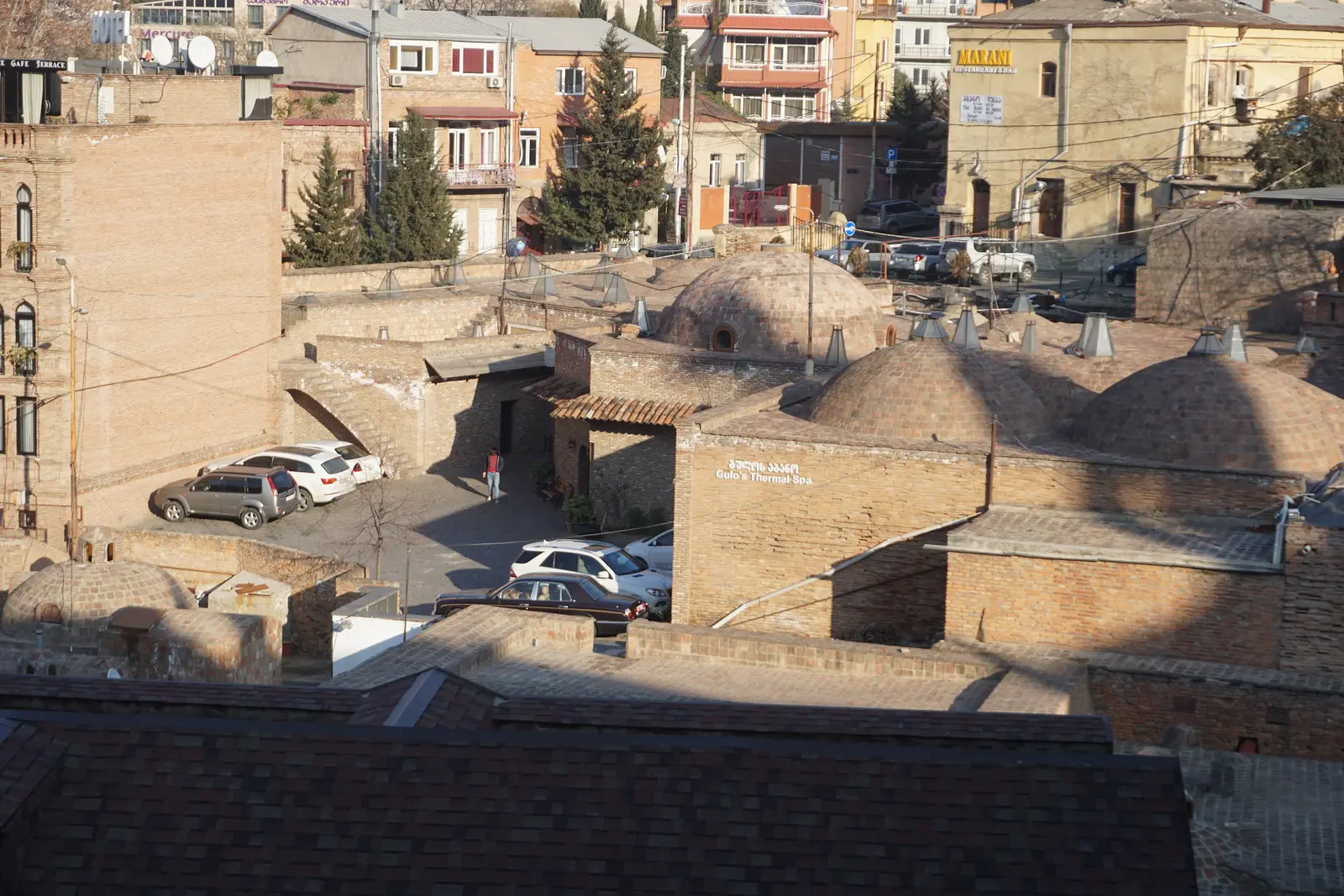
By the 13th century, Abanotubani — literally "bath district" — held as many as 65 working bathhouses, fed by water that rises from underground at a natural 40–50°C. Sitting on the Silk Road, Tbilisi's baths became a stop for merchants and travellers passing through, and the tradition never really left. Only a handful of the original bathhouses survive today, but they still draw a steady stream of locals and visitors under the same low brick domes, each one pierced with a small round skylight that lets in daylight and lets out steam.
The most recognisable is Chreli-Abano, also called the Orbeliani Bath after the noble family connected to it, easy to spot by its facade of blue, turquoise and ochre tiles in a style borrowed from Persian and Islamic decoration. A bathhouse is thought to have stood on the site since the medieval Islamic period, though the building seen today was rebuilt in the 19th century on the older plan. Alexandre Dumas bathed here during his 1858 visit to Tbilisi and later wrote that he doubted he'd ever manage to replicate the sensation back in Paris.
What actually happens inside
Most bathhouses offer two options: a public hall, usually separated by gender, or a private room rented by the hour, which suits couples, families or friends who'd rather not share. Either way, the plan is the same — a flight of stairs takes you down from street level into a warm, stone-lined chamber built directly over the spring, centred on a shallow sulphur pool.
- 01Rinse off before getting into the pool — it's standard practice, not a suggestion.
- 02Soak until your skin softens, then, if you want the full experience, ask for a kisa — a coarse mitt scrub that strips away a startling amount of dead skin.
- 03A soap massage often follows the scrub, brisk rather than gentle.
- 04Rest and rehydrate afterward; the heat and the scrub both take more out of you than they look like they will.
“The steam smells faintly of eggs and old stone, and after twenty minutes you stop noticing it at all.”
Going for the first time
You don't need to plan much. Walk down into Abanotubani in the late afternoon or evening, when the domes glow under string lights and the smell of sulphur drifts across the square, and you'll find several bathhouses within a few steps of each other, ranging from plain public halls to private rooms with higher ceilings and better tiling. Staff will usually walk you through the options in English. Bring a towel and flip-flops if you have them, though most places rent both, along with the kisa mitt if you decide on the scrub. Mornings and weekdays tend to be quieter than weekend evenings, when private rooms can fill up fast, so it's worth calling ahead if you have a specific bathhouse in mind.
It's easy to treat the baths as a spa treatment, and in the private rooms, with their better lighting and higher price, that's roughly what they are. But the public halls are closer to the older idea — a shared, unglamorous, faintly sulphurous ritual that Tbilisi has been practising for longer than most of its buildings have stood. Either version starts the same way: down a short flight of stairs, under a brick dome, into water that was warm long before the city that grew up around it.
Sources