 By Mikheil PapavaTbilisi local · Updated
Why Tbilisi
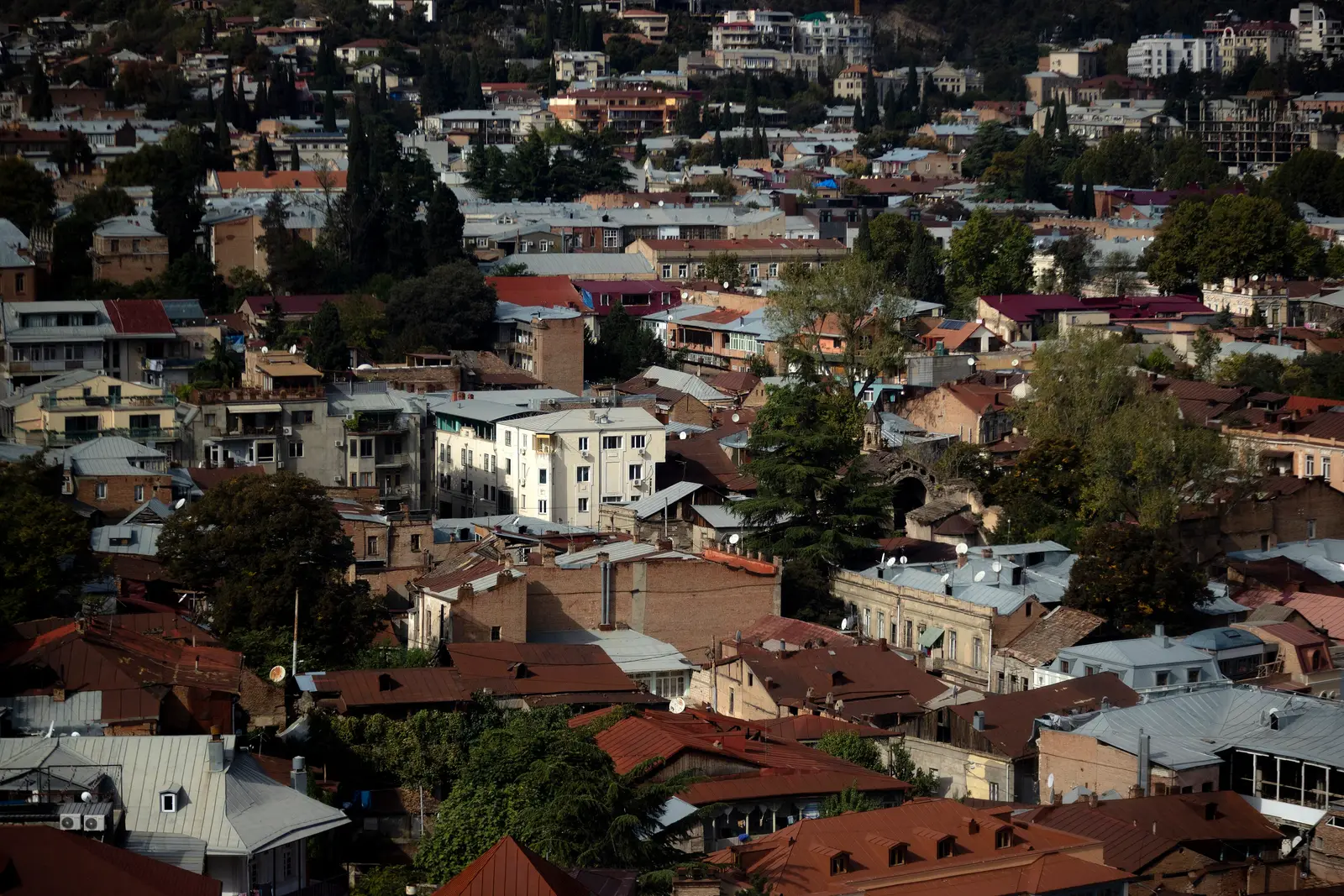
Tbilisi sits in a river valley in the South Caucasus, where Europe and Asia have traded and fought for fifteen centuries. You feel it on every street: Persian-style sulphur baths under brick domes, carved wooden balconies leaning over courtyards, Soviet modernist blocks, Art Nouveau mansions and brand-new glass bridges, all within a short walk.
It is also one of the most generous food and wine cities in Europe — a place where a long dinner (a supra) with toasts, khinkali and amber wine is still how friends spend an evening. The city is compact, affordable, safe and easy to explore on foot, by metro and by bus.
When to visit
The best months are May–June and September–October: warm days, cool evenings and the grape harvest (rtveli) in autumn. July and August are hot — often 35 °C and more — so plan sightseeing for mornings and evenings and spend the afternoon in a museum, a courtyard café or the hills of Mtatsminda.
Winter is mild and quiet, with low prices and occasional snow; it is a good time for food, theatre, opera and the sulphur baths. Check the 10-day weather forecast before you pack and see what is on during your dates.
Weather and events month by month →Events and festivals →Theatre, concerts and cinema this week →
Where to stay: the neighbourhoods
Old Tbilisi is the postcard: narrow lanes, the baths, Narikala fortress above and the river below. It is the most convenient base for a short first trip, and the busiest.
Sololaki is next door and quieter — 19th-century mansions with painted entrance halls, wine bars and some of the best restaurants. Vera and Mtatsminda are leafy, residential and full of small cafés. Across the river, Chugureti and Marjanishvili mix old houses with the creative hub Fabrika and are great value. Vake is the smart, green district with a big park; Avlabari has Sameba cathedral and views back over the Old Town.
What to see
Start where the city started: take the cable car from Rike Park up to Narikala fortress and the Mother of Georgia statue, then walk down through the Leghvtakhevi waterfall gorge to Abanotubani, the bath district. Cross the Bridge of Peace, see the leaning Gabriadze clock tower and walk up Rustaveli Avenue, the city’s grand boulevard with the opera, theatres and the National Gallery.
Make time for the Dry Bridge market (Soviet badges, enamel, paintings and silver), the open-air Ethnographic Museum and, at sunset, the Chronicles of Georgia above the Tbilisi Sea. For the city most visitors miss — painted entrances, iron staircases and quiet courtyards — use our hidden Tbilisi list.
What to eat and drink
Georgian food is the reason many people come back. Order khinkali (soup dumplings — hold the top, bite, sip, eat; leave the knot), khachapuri (Adjarian, the boat with egg and butter, or Imeretian, the round one), badrijani (aubergine rolls with walnut), pkhali, mtsvadi (grilled pork) and churchkhela for the road. Most dishes are made to share, and vegetarians eat very well here.
Georgia is one of the oldest wine countries in the world: try amber (orange) wine made in clay qvevri, a glass of Saperavi or Rkatsiteli, and a shot of chacha with care. Natural-wine bars in Sololaki and Old Tbilisi are a highlight; a wine tasting or a cooking class is the easiest way to learn the basics.
Getting around
The centre is walkable, but it is hilly — bring comfortable shoes. The metro has two lines and is fast and cheap; buses cover the rest of the city, and a single ride costs about 1 GEL. You can pay with a contactless bank card at the gate or the validator, or buy a reusable transport card.
Our journey planner gives door-to-door directions by bus, metro, cable car and on foot with live departures, and shows where the traffic is jammed right now. Taxis are booked through apps (Bolt is the most common) and are inexpensive. From the airport, bus 337 runs into the city, or a taxi takes about 30–40 minutes.
Journey planner with live traffic →Airport to the city →Metro, buses and cable cars →
Money, SIM cards and practical tips
The currency is the Georgian lari (GEL). Cards are accepted almost everywhere in the city; keep some cash for markets and small bakeries. When an ATM or terminal offers to charge in your home currency, choose GEL. See today’s official exchange rate and what things cost in Tbilisi.
A local SIM with plenty of data is cheap and sold at the airport and in shops (bring your passport). Tbilisi is one of the safer capitals in Europe; the main risk is traffic, so cross with care. Citizens of many countries can stay in Georgia without a visa, often for up to a year — check the rules for your passport before you travel.
Experiences worth your time
Soak in a private room at the sulphur baths (book ahead in the evening), spend a morning at the Dezerter bazaar, hunt for treasures at the Dry Bridge, and end the day with live music at Fabrika or a show at the opera or the Marjanishvili Theatre.
The easiest day trip is Mtskheta, Georgia’s ancient capital, 20 minutes away; further out are the Kakheti wine region and the mountains of Kazbegi — see all day trips from Tbilisi.
All experiences →Day trips from Tbilisi →Mtskheta day trip →
Tbilisi in 3 days
Day 1 — Old Tbilisi: cable car to Narikala, the waterfall, the baths, lunch in Sololaki, Bridge of Peace and an evening wine bar. Day 2 — Rustaveli Avenue and the National Gallery, the Dry Bridge market, Vake Park, and a supra-style dinner. Day 3 — Fabrika and Marjanishvili in the morning, the Ethnographic Museum or Mtskheta, and the Chronicles of Georgia at sunset.
Short on time? Try 24 hours or 48 hours in Tbilisi. Travelling with children, on a budget or in the rain? There is a plan for that too.
Questions people ask about Tbilisi
How many days do you need in Tbilisi? +
Three days is ideal for the Old Town, Rustaveli Avenue, the markets and a food and wine evening. With five days or more you can add day trips to Mtskheta, Kakheti or Kazbegi.
What is the best time to visit Tbilisi? +
May–June and September–October have the most comfortable weather. July and August are hot, and winter is mild, quiet and cheaper.
Is Tbilisi safe for tourists? +
Yes. Tbilisi is considered one of the safer capitals in Europe. Use normal city precautions and take extra care with traffic when crossing roads.
How do you get around Tbilisi? +
On foot in the centre, and by metro and bus elsewhere — a ride costs about 1 GEL and you can pay with a contactless bank card. Taxis are booked through apps such as Bolt. The MyTbilisi journey planner gives live bus and metro directions.
What currency is used in Tbilisi and can I pay by card? +
The Georgian lari (GEL). Cards are widely accepted; carry some cash for markets and small shops.
What food should I try in Tbilisi? +
Khinkali, khachapuri, badrijani with walnut, pkhali, mtsvadi and churchkhela — with Georgian amber wine made in qvevri.